
 Translate
 Arabic
 Chinese (Simplified)
 Dutch
Dutch English
 French
 German
 Italian
 Portuguese
 Russian
 Spanish
RWJBarnabas Health and Rutgers Researchers Find AI Tool Helps Detect Patient Deterioration Earlier, Reducing Hospital Deaths
RWJBarnabas Health | July 29, 2026
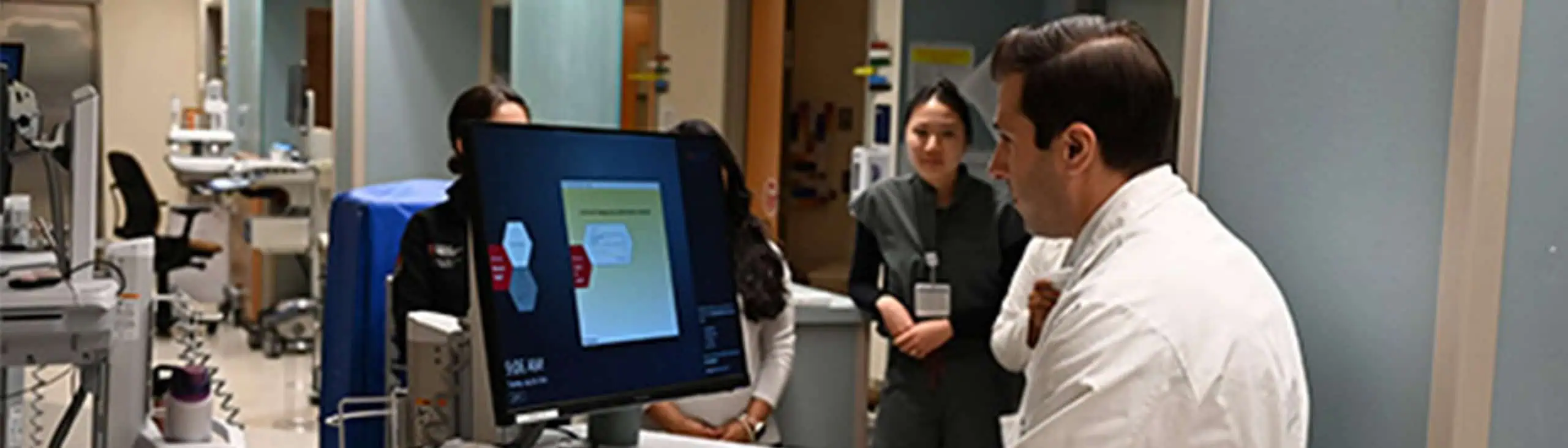
Researchers from RWJBarnabas Health and Rutgers Robert Wood Johnson Medical School found that an artificial intelligence (AI)-enabled early warning system helped identify hospitalized patients at risk of rapid clinical decline sooner, contributing to fewer deaths among high-risk patients.
Published in NEJM AI, a journal from the New England Journal of Medicine group, the study evaluated outcomes among 23,132 high-risk patients across 11 RWJBarnabas Health hospitals. Deaths among high-risk patients fell from 23.1 percent to 18.6 percent following implementation of the AI-enabled early warning system, representing an 18 percent reduction in the risk-adjusted odds of in-hospital death.
Hospitalized patients can deteriorate quickly, often before obvious warning signs become apparent. Researchers evaluated the Epic Deterioration Index (EDI), an AI-enabled tool that continuously analyzes information already captured in the electronic health record, including vital signs, laboratory results, nursing assessments and age, to identify patients at increased risk of serious clinical decline. The system recalculates risk scores every 15 minutes and automatically alerts rapid response teams when patients reach the highest-risk category.
Before evaluating the technology in this study, RWJBarnabas Health and Rutgers spent several years developing and implementing a systemwide approach to using the EDI across its hospitals. The health system first integrated the tool into its electronic health record at its academic medical center, Robert Wood Johnson University Hospital, to pilot and refine it, including, how and when alerts were delivered, established automatic notifications to rapid response teams, trained clinicians on its use and continuously monitored its performance. Researchers from Rutgers then partnered with RWJBarnabas Health to evaluate the impact of this approach in real world clinical practice and rapidly rolled out the platform the other 10 hospitals.
Read the full story here.